

Abstract
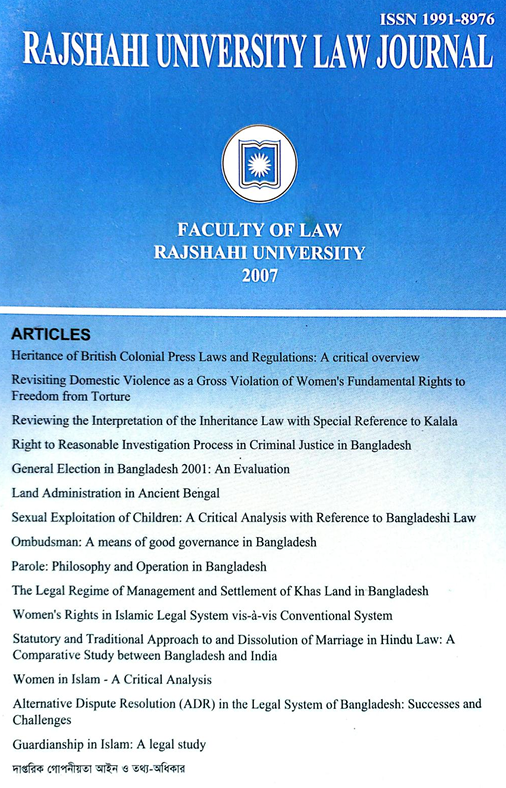
The issue of management and settlement of khas land in Bangladesh is an age-old and unsettled issue of mostly wanted agrarian reform. The way in which khas land is currently managed and settled remains firmly rooted in practices established during the colonial era. The British, from the beginning, gave high priority to the organization of a centrally controlled management system that was designed to maintain political control and secure a steady source of state finance. Fairly little change has taken place in the post-independence era. Attempts at re-distributive reform have been a feature of both the Pakistan and Bangladesh periods. Given high population densities and increasing fragmentation of holdings, whilst ostensibly planned to put land in the hands of the tiller and to return water bodies to those who fish them, these have mostly been circumvented by the wealthy and powerful vested groups. It has always been in the hotplate but is not taking enough attention of the ruling authorities. The Constitution of the People’s Republic of Bangladesh has envisioned a society free from hunger, bestowed with the right to equal access to and equitable sharing of resources paving the way to establish economic and social justice. The proper management and settlement of khas land will definitely go a long way to pull off the long cherished social order.