

Abstract
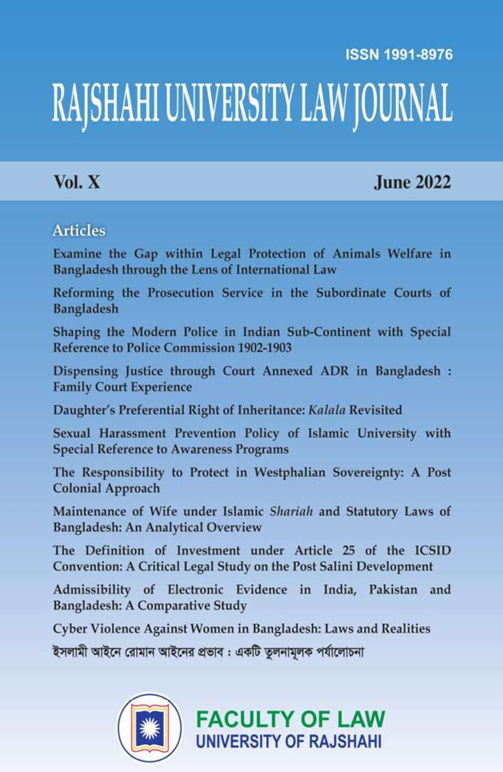
Alternative Dispute Resolution (ADR) is the best practice in family disputes worldwide. In a country like Bangladesh, ADR offers a great opportunity for an aggrieved person especially for woman, to directly participate in the dispute resolution process and voice her grievances. It removes bitterness between the parties, the risk of exposure of a woman to public, avoids ill effects on the other members of the family, particularly the children and aids to make an outcome within a shortest possible time. A uniform family court law named The Family Court Ordinance has passed in 1985 that introduced compromise or reconciliation, as a mode of ADR where a Judge himself can conciliate a family suit. This study recounts the institutionalized provisions of ADR in Family Courts and evaluates its application level approach. The aims of this study are to explore and analyse the statutory, institutional and procedural lacunas of ADR provisions under the law. This research also pointed out the challenges and addressed court connected ADR in family disputes.